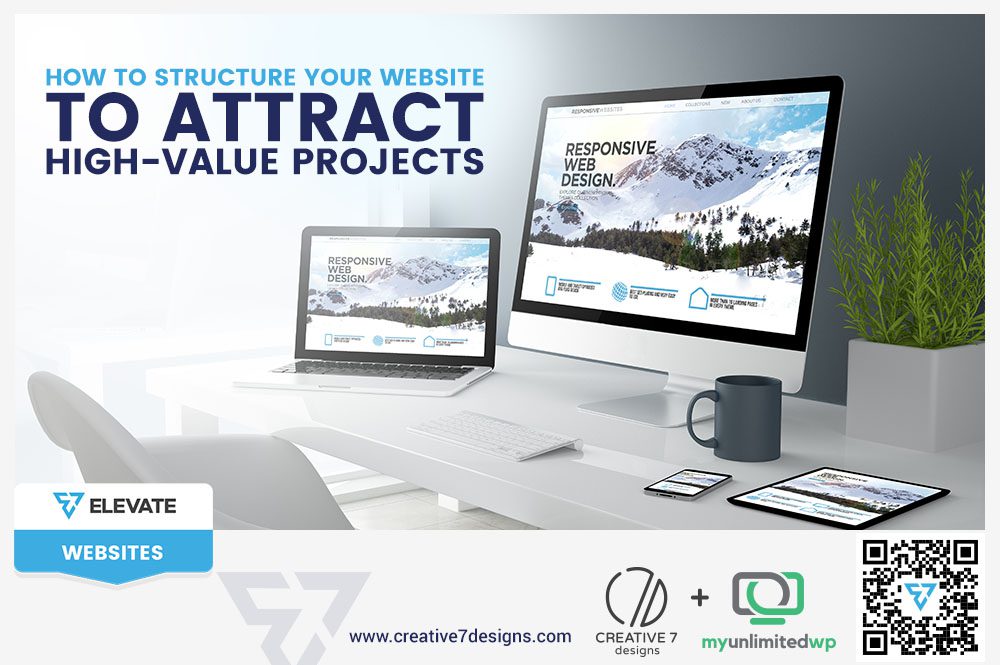
Overview: Learn how to structure your website to attract high-value clients, build trust fast, and convert serious decision-makers into premium projects.
High-value clients don’t browse websites casually — they evaluate them. Within seconds, they decide whether your business looks credible, experienced, and worth a premium investment. That decision is rarely based on design alone. It’s based on structure.
In 2026, a website that attracts high-value projects is not just visually appealing; it is intentional, clear, and strategically organized to guide serious decision-makers toward action.
Why Website Structure Matters More Than Ever
High-value clients are time-conscious and outcome-driven. They scan before they read, looking for proof, clarity, and confidence. If your website feels cluttered, vague, or overly generic, it signals risk — regardless of how good your services actually are.
As Elevate: Websites consistently emphasizes, structure is what transforms a website from an online brochure into a business development tool. Without it, even strong brands struggle to convert premium opportunities.
Start With a Clear Positioning Above the Fold
Your homepage must immediately answer three questions:
-
Who do you help?
-
What problem do you solve?
-
Why should they trust you with high-value work?
This information should appear above the fold, supported by a concise value statement and a direct call to action. Avoid clever but unclear messaging. High-value clients want confidence, not puzzles.
Design Your Pages for Decision-Makers, Not Browsers
High-value clients read differently. They look for validation points, not sales language. Structure your pages to surface:
-
Clear service differentiation
-
Outcomes instead of features
-
Who your services are not for
Dedicated service pages are essential. Bundling everything into one generic page dilutes perceived expertise. Each core service should have its own page, clearly structured to demonstrate depth, relevance, and authority.
Also Read >> 13 Web Design Best Practices to Improve UX in 2026
Use Proof Strategically — Not Excessively
Testimonials and case studies matter, but placement is critical. Instead of grouping them all on one page, integrate proof contextually:
-
After service explanations
-
Near calls to action
-
Within key decision sections
High-value clients want reassurance, not noise. One strong case study placed correctly often outperforms ten generic testimonials placed randomly.
It’s Important to Create a Logical User Flow
Every page should guide visitors toward a next step. This does not mean aggressive selling; it means intentional navigation.
Effective structure includes:
-
Clear page hierarchy
-
Predictable navigation labels
-
Consistent CTA placement
When visitors never wonder “what should I do next?”, your website starts functioning as a silent salesperson.
How to Elevate Your About Page
For high-value projects, the About page is often one of the most visited pages, and one of the most mishandled.
This page should:
-
Reinforce expertise and experience
-
Communicate values and standards
-
Position your brand as selective, not desperate
High-value clients are drawn to businesses that appear intentional about who they work with. Your About page should reflect that confidence.
Reduce Friction on Contact Pages
If your contact process feels casual or cluttered, it undermines trust. High-value clients expect clarity and professionalism at every step.
Best practices include:
-
Clear expectations of the next steps
-
Minimal but purposeful form fields
-
Language that reinforces exclusivity and seriousness
This is where many websites lose premium leads — not because of lack of interest, but because of lack of structure.
Frequently Asked Questions (FAQs)
1. What makes a website attractive to high-value clients?
High-value clients look for clarity, credibility, and confidence. A well-structured website clearly defines who you serve, what you offer, and why you’re trusted, while guiding visitors through a logical decision-making journey.
2. Do high-value projects require a different website structure than general clients?
Yes. High-value clients scan for proof, outcomes, and expertise rather than surface-level visuals. They expect dedicated service pages, strategic social proof, and a professional flow that respects their time and decision-making process.
3. How often should a website be restructured to attract better projects?
Most service-based websites benefit from a structural review every 12–18 months. As services evolve and client expectations change, updating your website ensures it continues to attract the right opportunities rather than just more traffic.
Final Thoughts
Attracting high-value projects is not about adding more content but about organizing what you already have with intention. Structure communicates confidence, experience, and readiness for serious work.
At Elevate: Websites, we help service-based brands design websites that don’t just look professional — they function strategically, guiding the right clients toward meaningful, high-value engagements.