
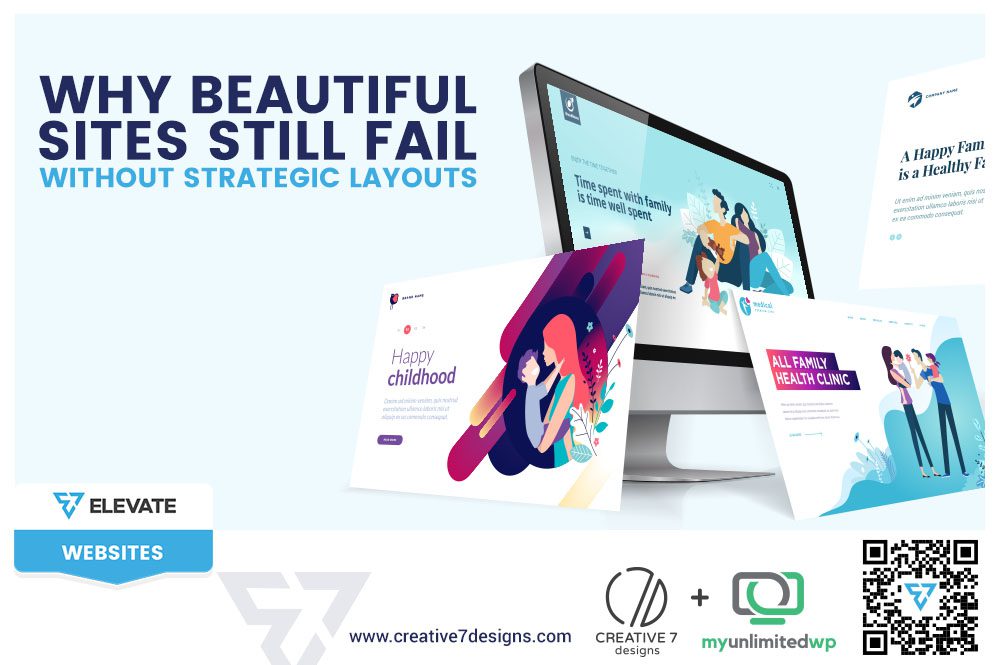
Overview: Discover why beautiful websites fail to convert and how strategic layout design drives clarity, user flow, and measurable results in 2026!
A beautiful website can win admiration.
But admiration doesn’t pay the bills.
In 2026, businesses are investing more than ever in polished visuals, modern typography, bold branding, and sleek animations. Yet many of these visually impressive websites quietly under-perform. Traffic comes in. Engagement looks promising. But inquiries, bookings, and qualified leads? Minimal.
The issue isn’t beauty. It’s structure.
A site can look exceptional and still fail — if the layout isn’t strategically designed to guide decision-making.
Why Isn’t My Beautiful Website Converting?
Because aesthetics and performance are not the same thing.
Design attracts attention. Layout drives action.
When a website focuses heavily on visuals but ignores content hierarchy, user flow, and intent-based structure, visitors may enjoy browsing, but they won’t know what to do next.
Conversion happens when:
-
The value proposition is immediately clear
-
Information flows logically
-
Calls to action appear at the right time
-
The page reduces cognitive load
Without these elements, beauty becomes decoration rather than direction.
What Is a Strategic Website Layout?
A strategic layout is intentionally structured around how users think and behave.
It answers three core questions within seconds:
-
What is this business offering?
-
Is it relevant to me?
-
What should I do next?
Rather than simply stacking visually appealing sections, a strategic layout creates a guided journey, moving users from curiosity to clarity to action.
At Elevate: Websites, layout strategy always precedes visual styling. Why? Because structure determines performance.
How Do Visual-First Designs Create Friction?
When design decisions prioritize aesthetics over usability, subtle friction appears.
Common examples include:
-
Oversized hero sections with vague messaging
-
Hidden CTAs below long visual scroll sequences
-
Creative navigation labels that confuse rather than clarify
-
Portfolio-style layouts with no contextual explanation
Users don’t struggle loudly. They leave quietly.
And in competitive markets, that quiet exit costs opportunities.
Why Do High-End Designs Still Lose High-Value Clients?
High-value clients evaluate websites differently.
They scan for:
-
Clear positioning
-
Evidence of expertise
-
Logical organization
-
Professional structure
If they have to interpret what you do, scroll excessively to find services, or guess the next step, trust weakens — regardless of how premium the design feels.
Strategic layout communicates competence.
Unstructured beauty communicates uncertainty.
What Happens When Layout and Design Work Together?
When layout is strategic and design enhances it, results improve dramatically.
Strong layouts:
-
Surface value immediately above the fold
-
Break information into digestible sections
-
Reinforce key messages with visual hierarchy
-
Place CTAs where intent peaks
In these cases, design becomes an amplifier.. not a distraction.
Also Read >> Layout Design: Everything You Should Know
How Can You Tell If Your Layout Is the Problem?
Your layout may be limiting performance if you notice:
-
High traffic but low conversions
-
Strong engagement time but weak inquiries
-
Visitors are viewing multiple pages but not taking action
-
CTAs that are visually present but behaviorally ignored
These are signs the journey is unclear, not that the design is unattractive.
Why a Website’s Structure Matters More in 2026 Than Ever
User behavior has evolved. Attention spans are shorter. Expectations are higher. Competition is stronger.
Users don’t admire websites for long — they evaluate them quickly.
In 2026, a successful website must:
-
Communicate value instantly
-
Reduce decision fatigue
-
Guide users logically
-
Reinforce credibility through structure
Without these elements, even the most visually refined site becomes a passive brochure.
The Real Role of Design in High-Performing Websites
Design should:
-
Direct attention
-
Support clarity
-
Strengthen hierarchy
-
Enhance trust
It should never compensate for missing strategy.
A strategic layout ensures:
-
Each section has purpose
-
Each scroll earns progression
-
Each CTA feels natural
That’s how beauty turns into business.
Frequently Asked Questions (FAQs)
1. Why do beautiful websites fail to convert?
Beautiful websites often fail because they lack strategic layout. Without clear structure, user flow, and well-placed calls to action, visitors don’t know what to do next.
2. What is a strategic website layout?
A strategic website layout organizes content intentionally to guide users from awareness to action. It prioritizes clarity, hierarchy, and conversion over purely visual appeal.
3. How can I improve my website’s layout without redesigning it?
You can improve layout by clarifying your value proposition, restructuring sections for better flow, adding visible CTAs, and simplifying navigation — often without a full redesign.
Final Thoughts
A beautiful website is a powerful asset.
But without strategic layout, it’s only surface-level performance.
True website success happens when structure leads and design supports. When clarity precedes creativity. When user behavior informs layout decisions.
At Elevate: Websites, we help brands move beyond aesthetic appeal and build strategically structured websites that guide, convert, and perform — not just impress.
Because in 2026, the sites that win aren’t just beautiful.
They’re intentional.